
Litter Scoops & Disposal Systems
The unglamorous kit that keeps a litter tray genuinely fresh — solid sifting scoops and sealed disposal bins that trap the smell where it belongs.
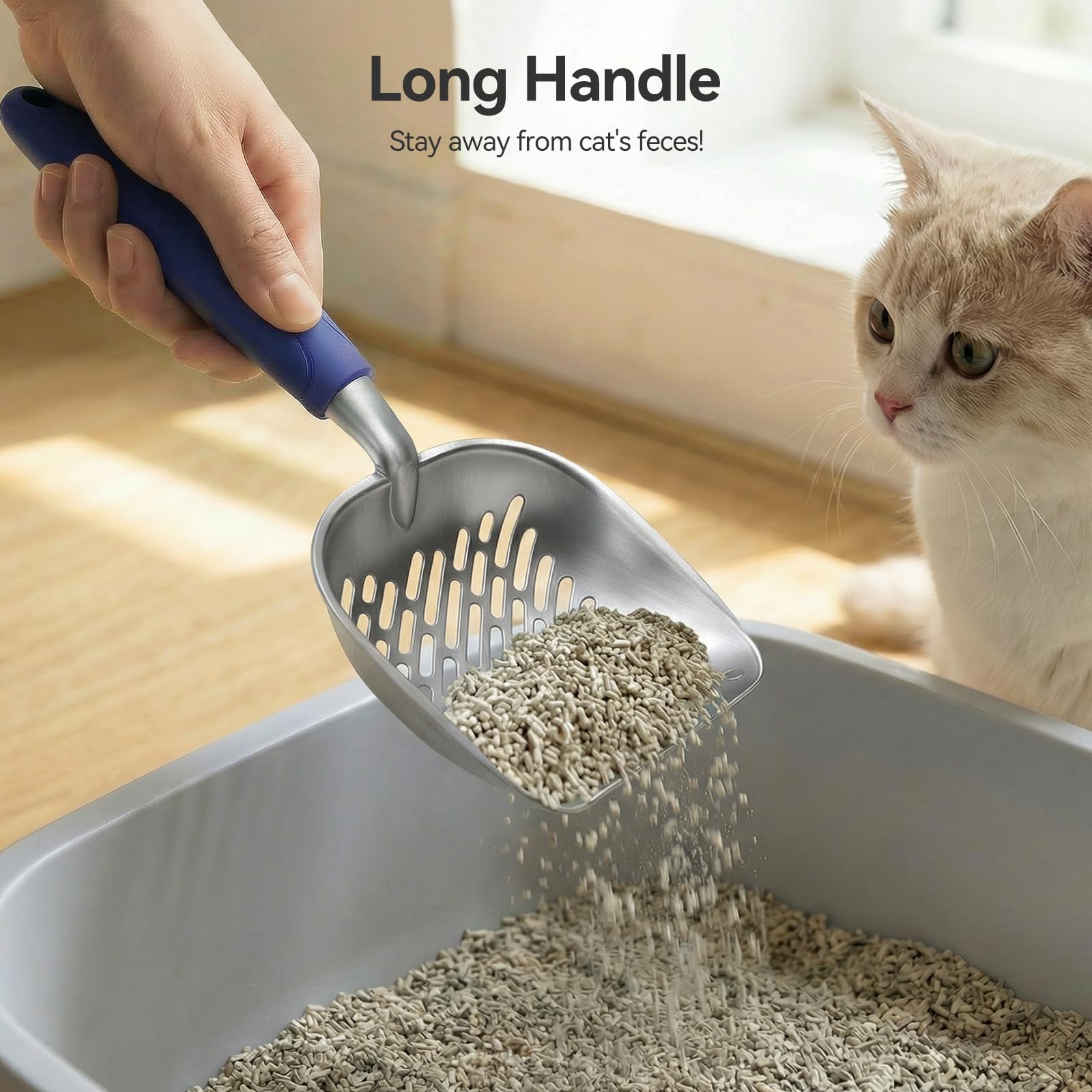
Choosing a scoop that lasts
A flimsy scoop bends under wet clumps and lets fine litter fall back through, so the job takes twice as long. Look for a rigid metal or thick reinforced-plastic scoop with slots fine enough to sift loose grains yet wide enough to drain the dust quickly.
Slot spacing should be matched to your litter — fine clumping clay needs narrow slots, while larger crystal or wood pellets sift cleanly through wider gaps. A deep, slightly curved head lifts clumps in one pass without crumbling them.
Sealed disposal and a daily routine that controls odour
A sealed disposal system works like a nappy bin for litter: you drop clumps in, twist the mechanism, and a multi-layer liner locks the waste and smell into individual sealed sections until the bag is full. It beats traipsing to the outside bin several times a day and keeps the whole room fresher.
The single biggest factor in odour control is frequency — scoop at least once a day, ideally twice, so nothing sits and breaks down. Top the litter back up to depth, give the tray a full wash and refill weekly, and the smell rarely gets a chance to take hold.
Everything here is chosen to be genuinely useful in everyday life with your pet — quality-checked, fairly priced and shipped tracked across the UK. For any health concern, your vet is always the best first port of call.
Common questions
How often should I scoop the litter tray?
At least once a day, and twice is better in a busy or multi-cat home. Cats are fastidious and may avoid a dirty tray, so prompt scooping protects both hygiene and good toileting habits.
Do sealed litter disposal bins really stop the smell?
They help a great deal by trapping each deposit in a sealed section of multi-layer liner, so odour is not released every time you add more. They work best when you still empty them before they are completely full.
What scoop suits non-clumping or pellet litter?
Choose a scoop with wider slots so larger crystal or wood pellets sift through while soiled material is caught. Fine clumping clay, by contrast, needs a fine-slotted scoop to lift clumps intact.
Free pet welcome kit
Four printable tools, zero cost
The new-pet checklist, a vaccination & worming tracker, a feeding-portion guide and a house-training chart — straight to your inbox, no spam, unsubscribe whenever.